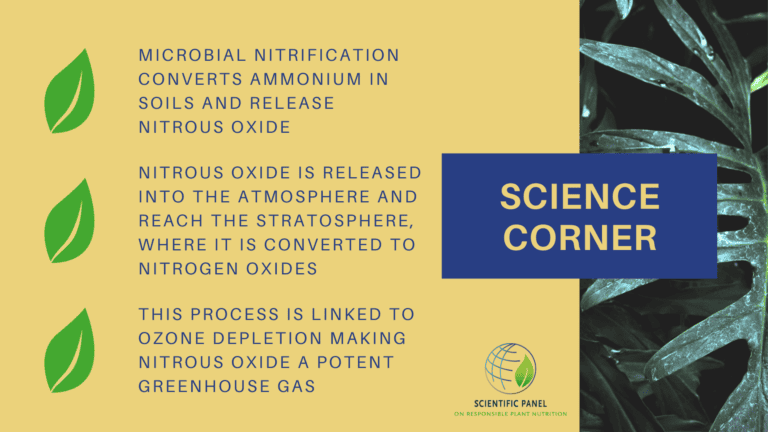
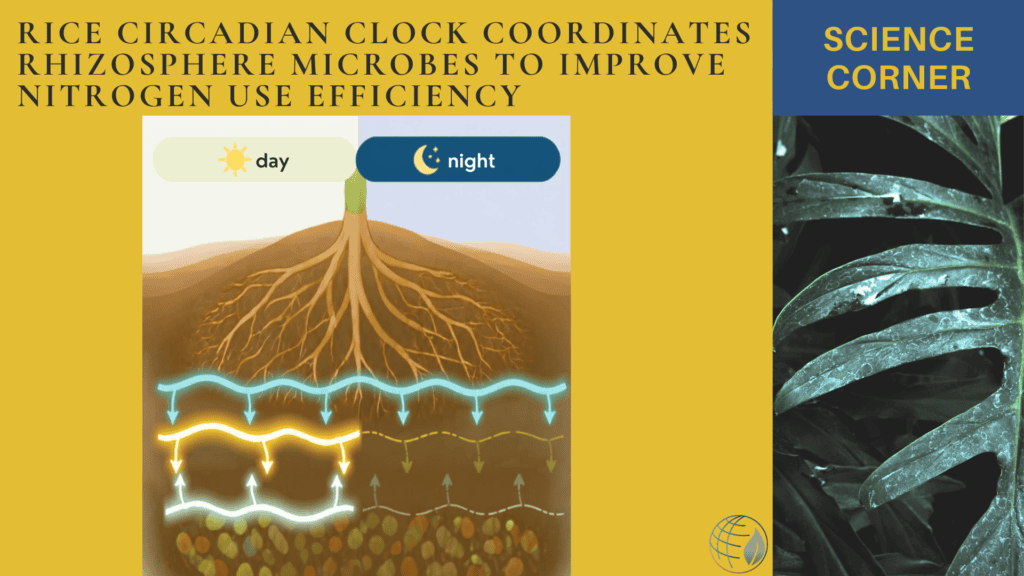
Crop production relies heavily on nitrogen (N) fertilizers. But much of the applied N is lost to the environment; this loss not only decreases N use efficiency but also increases greenhouse gas emissions and the risk of eutrophication. A major obstacle to efficient N utilization is the temporal mismatch between soil N supply and crop N demand.
During daytime plant roots take up N at a faster rate than at night. Most soil N is present in organic forms that rely on soil microorganisms for mineralization into plant-available ammonium . If microbial ammonium release fails to match the peak uptake period of roots, temporal supply–demand mismatch occurs. This potentially limits crop N acquisition even when there is ample N in the soil. Synchronizing soil N supply to plant’s N uptake is key to improving N use efficiency.
A study “The rice circadian clock orchestrates the rhizosphere microbiome to synchronize nitrogen supply with plant demand” published in Cell Host & Microbe, led by Professor Guohua Xu’s team at Nanjing Agricultural University, reveals that rice plants can actively regulate rhizosphere microbial functions to synchronize soil N supply with their diurnal demand. They found that the transcription factor Nhd1 is the central regulator that orchestrates rhythmic plant–microbe N coordination.
The rice endogenous circadian clock is an internal time-keeping system that enables plants to anticipate diurnal environmental changes and coordinate physiological processes. As the core circadian clock component, Nhd1 modulates root ammonium uptake by activating the ammonium transporter AMT1;3 in the roots. Furthermore, Nhd1 also mediates diurnal fluctuations in the secretion of root exudates, thereby driving synchronized rhythmic expression of microbial N cycling genes in the rhizosphere.
The study reveals two key metabolite-mediated regulatory pathways. Nhd1 triggers a daytime-specific peak secretion of quercetin 3-gentiobioside (Q3Gen). This signal molecule upregulates the expression of core microbial N cycling genes, such as gdh2 encoding glutamate dehydrogenase 2, and promotes mineralization of organic N into ammonium. Meanwhile, Quercetin 3-O-sophoroside (baimaside) is continuously secreted at a steady baseline level throughout day and night to maintain basal microbial N metabolism.
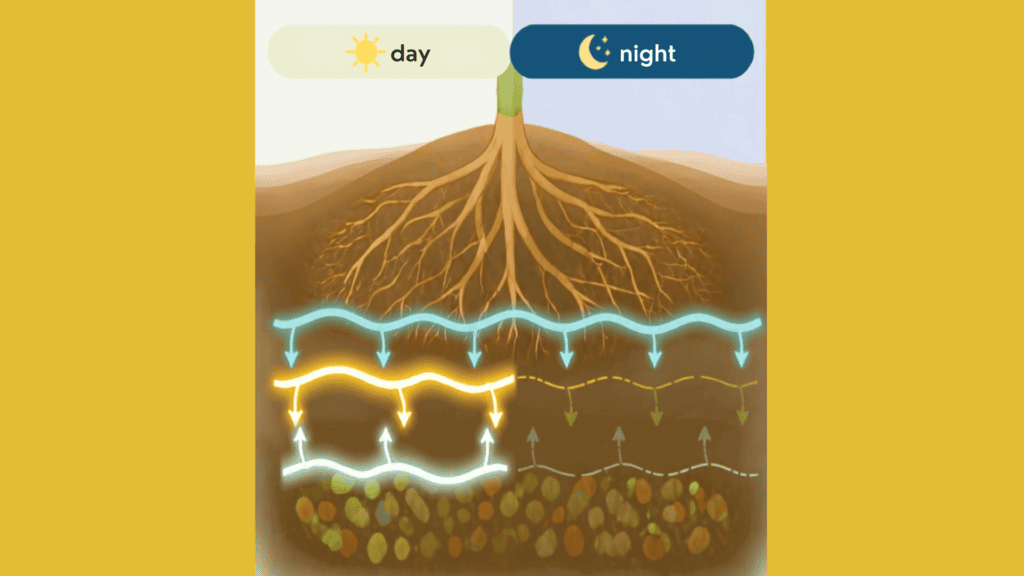
This dual regulatory pattern establishes a precise diurnal rhythm: accelerated ammonium production during daytime to match peak plant uptake, and steady N turnover at night. In rice mutants in which Nhd1 is not functional, this sophisticated synchrony is completely disrupted, resulting in severe temporal mismatch between soil N supply and crop N demand.
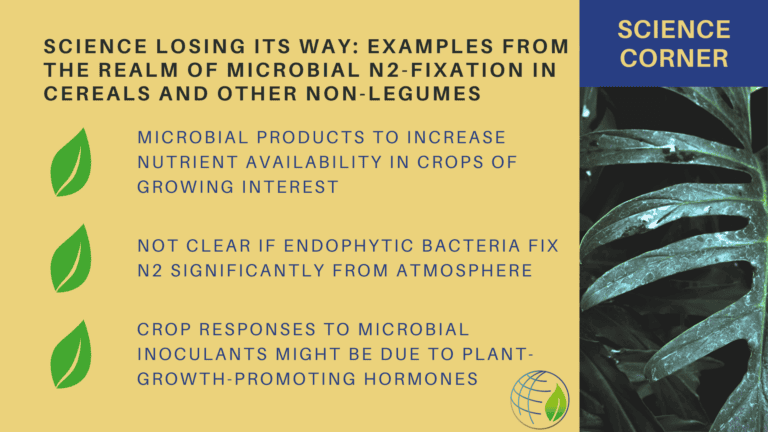
The researchers further isolated rhizosphere microorganisms that respond to the Nhd1-dependent diurnal rhythm. Based on these, they constructed a synthetic microbial consortium, which they inoculated into rice plant soil. This significantly increased both grain yield and nitrogen use efficiency in field trials. The benefit was especially evident in rice varieties with weak Nhd1 activity. This finding provides a targeted microbial improvement strategy for crop varieties with weakened circadian clock function.
This study adds a “biological clock” dimension to the traditional 4R nutrient stewardship rules: Right Source, Right Rate, Right Time, and Right Place. “Right Time” should include both picking the right time of fertilizer application and matching N supply to the crop’s daily uptake rhythm; the latter can be harnessed through crop breeding and the use of microbial inoculants.