Magnesium is an essential element for both plant growth and human nutrition. In plants, magnesium participates in numerous biochemical and physiological processes, including photosynthesis, protein synthesis and nucleotide metabolism. Similarly, in humans, it is essential for energy metabolism, electrolyte balance, muscle contraction and neurotransmission. Therefore, plants deficient in magnesium risk losing yields while their crops risk impacting consumers’ health.
Rice is a staple food for nearly half of the global population and an important dietary magnesium source. However, it was unclear how rice plants accumulate magnesium in the grain. A recent study published n PNAS, led by Professor Jian Feng Ma at the Institute of Plant Science and Resources, Okayama University, identified a magnesium efflux transport responsible for this task.
They found that OsMGR2 encodes for an efflux transporter localized to the plasma membrane. Belonging to the Magnesium Release transporter family, OsMGR2 is constitutively and highly expressed in the stele tissues of roots, the phloem region of both enlarged and diffused vascular bundles in nodes, and the ovular vascular trace of caryopses.
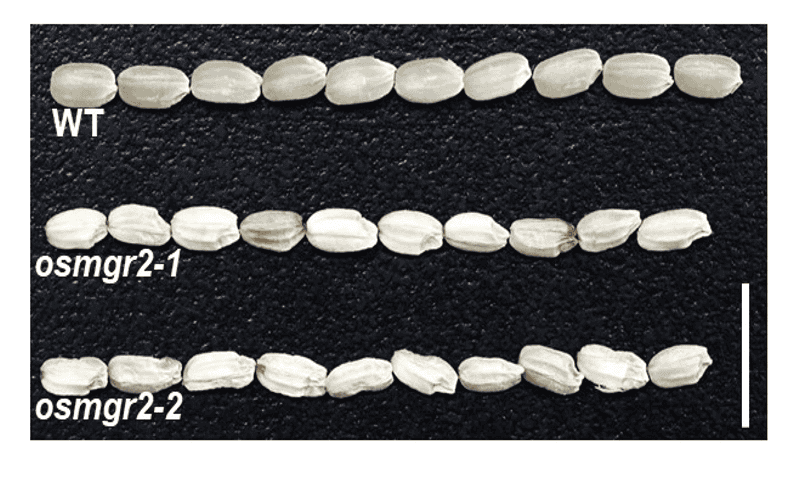
When OsMGR2 gene was knocked out, magnesium accumulated abnormally in roots and husks instead of being efficiently delivered to shoots and grains. Furthermore, the mutants displayed severe growth defects under low-magnesium conditions, including leaf chlorosis, reduced biomass, and poor grain development. The rice grains of the mutants were smaller, lighter, shriveled, and less transparent compared with normal rice plants (Fig. 1). The eating quality was also reduced with reduced stickiness and altered texture.
Therefore, depending on the location of its expression, OsMGR2 plays a different role within rice:
- in the root stele region, OsMGR2 is responsible for the root-to-shoot translocation of magnesium
- in the nodes, OsMGR2 is preferentially required for delivering magnesium to the second newest organs
- at the ovular vascular trace, the region of entry into the grain, OsMGR2 is responsible for exporting magnesium from maternal vascular tissues to the grain; processes crucial for grain development and eating quality in rice
Together, these findings revealed that magnesium transport is closely linked to both crop productivity and eating quality.
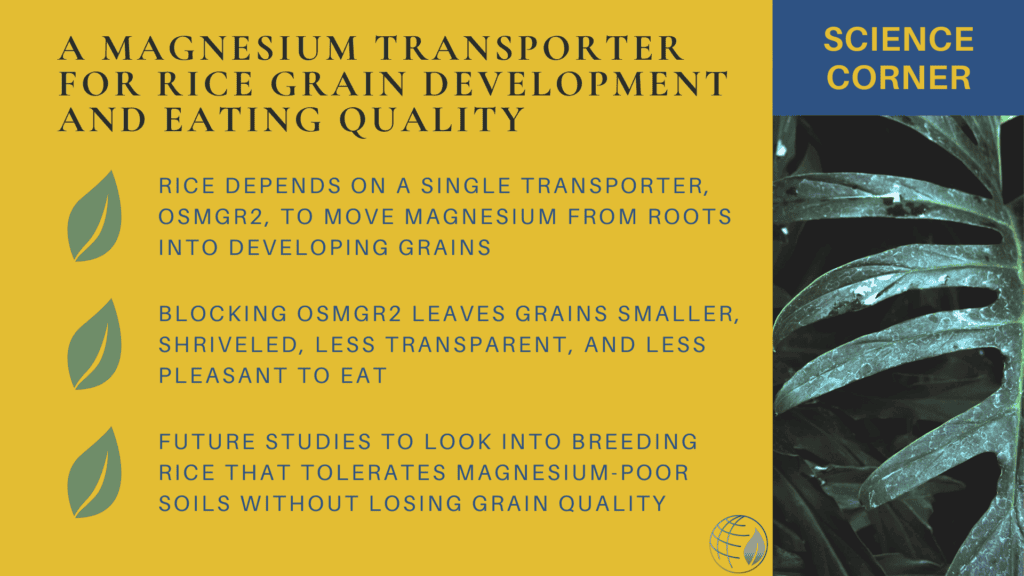
Magnesium deficiency in soils is becoming a growing concern in several rice-producing regions, reducing yields and grain quality. By understanding the molecular basis of magnesium transport in crop plants, breeders may eventually develop rice varieties that tolerate magnesium-poor environments while maintaining nutritional value and eating quality.
Beyond rice, the findings may also inspire broader research into mineral transport systems in cereals and other staple foods, potentially supporting future strategies for global nutritional security.