Better plant nutrition can raise smallholder incomes, reduce the climate cost of growing more food and help protect biodiversity by easing pressure to convert natural habitats.
The climate cost of a harvest begins before a seed is sown. It can begin in the factory making fertiliser, or with the conversion of a forest or grassland to create another field. For African countries facing rising food demand, that distinction matters. Keeping fertiliser use low is no environmental victory if poor yields lead to further land clearance. [1]
The need is to balance plant nutrition, including nitrogen, phosphorus, potassium and other essential nutrients. Here, fertilizers refer to mineral products made industrially or derived from mined deposits, used alongside organic inputs. Nitrogen accounts for most fertiliser-related greenhouse gas emissions.
The global contrast is stark. Around 2020, farmers applied an average of about 89 kg of nitrogen fertiliser per hectare annually in North America and 109–128 kg in East Asia and Western and Northern Europe. East, West and Middle Africa remained below 20 kg (Figure 1). Reducing excessive inputs can benefit regions with nutrient surpluses. Many African farmers face the opposite problem: severe nutrient shortages that hold back harvests. [2]
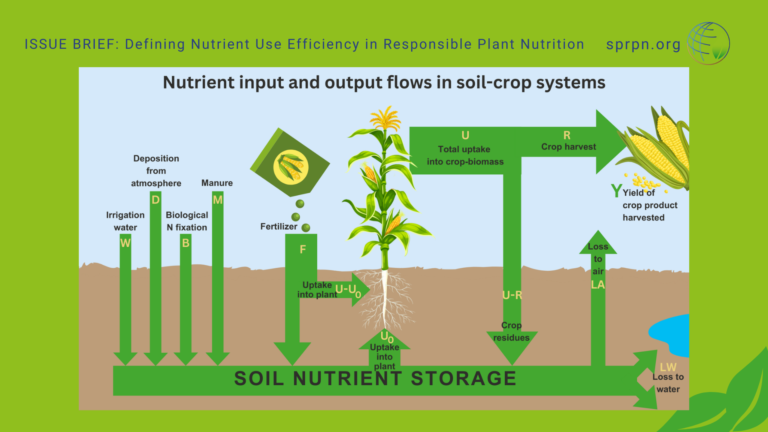
Manure and biological nitrogen fixation already provide major nitrogen inputs to African cropland, while crop residues recycle nutrients within farms. These resources remain indispensable partners to mineral fertiliser. Legumes bring nitrogen into farming systems, and organic inputs support soil health. But recycling and biological fixation alone cannot supply enough nutrients as yields rise, nor create new phosphorus or potassium: nutrients exported in produce and lost from fields must ultimately be replenished. In African regions dominated by rainfed annual cropping, increased mineral fertiliser use should therefore complement agroecological practices. [3]
The scale of the task is substantial. Projections for ten sub-Saharan African countries indicate that cereal demand will approximately double between 2020 and 2050. Meeting that demand on existing cereal land would require annual yield gains to accelerate from about 20 to 58 kilograms per hectare, with nitrogen inputs increasing at least threefold alongside better agronomy. [4]
There is also a hidden nutrient debt. Modelling maize production in nine countries reveals why nutrient inputs must increase disproportionately as yields rise: existing harvests already draw on soil nutrient reserves that cannot be mined indefinitely. Fertiliser must support larger harvests while stopping that depletion. [5]

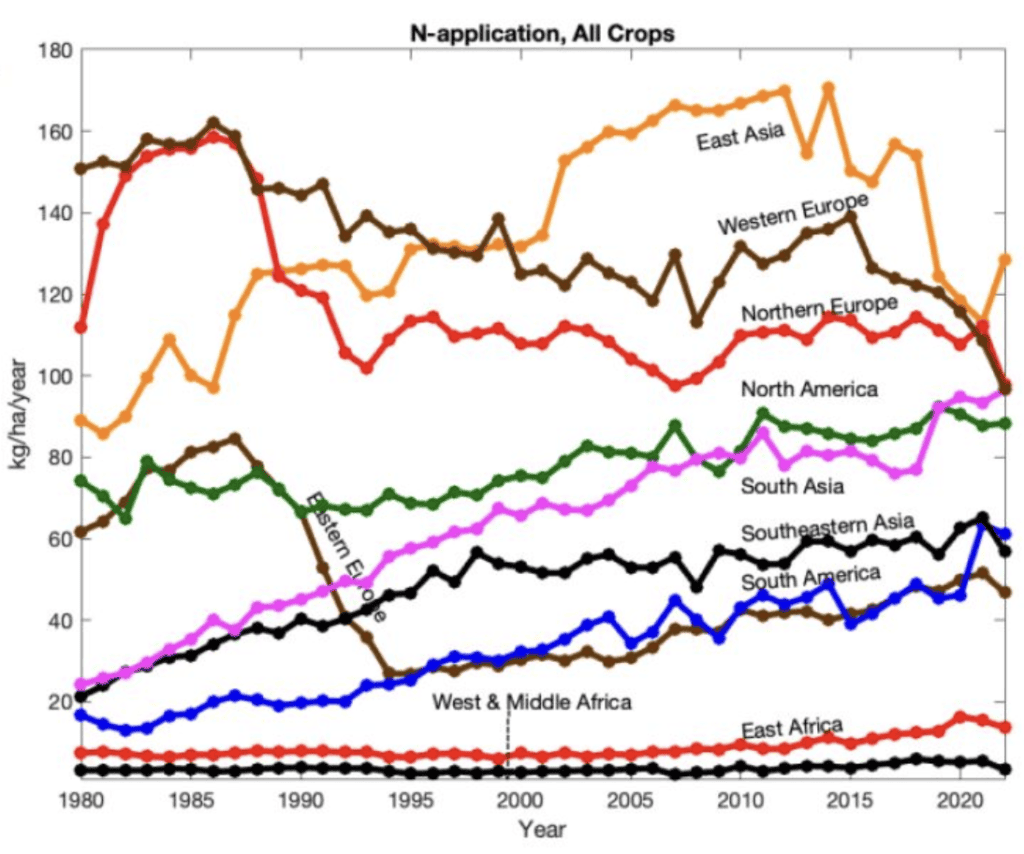
Figure 1. Four decades of contrasting nutrient use. Nitrogen fertiliser application rates across all crops in selected world regions, 1980–2022, expressed as kilograms of nitrogen per hectare of harvested crop area per year. East Africa and West and Middle Africa remain far below most other regions shown. [6]
Each region needs a nutrient strategy suited to its starting point. Nitrogen application rates have fallen from earlier peaks in Western and Northern Europe and, more recently, East Asia, as efforts to improve efficiency and reduce environmental harm have gained ground. Rates in West and Middle Africa remain low, with little sustained increase. Shortages also extend to phosphorus, potassium and other nutrients in many African farming systems. The priority is to correct deficiencies where they constrain production while reducing waste where inputs exceed crop needs. [7]
Count the land conversion as well as the fertiliser
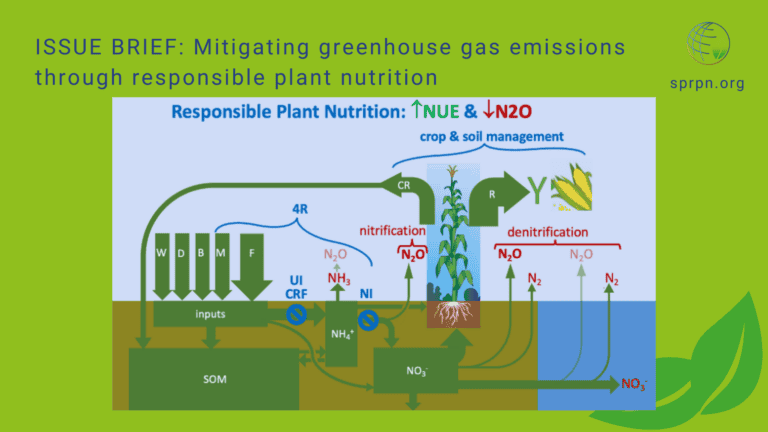
Fertiliser has a significant carbon footprint, dominated by nitrogen. Manufacturing nitrogen fertiliser consumes energy, and nitrogen added to soil can escape as nitrous oxide, a potent greenhouse gas. Synthetic nitrogen fertiliser production, transport and use emitted an estimated 1.13 billion tonnes of carbon dioxide equivalent in 2018, roughly 2.1% of global greenhouse gas emissions. As food demand rises, emissions from additional nitrogen use must therefore be weighed against those from expanding cropland to produce the same additional food. [8]
Two modelled pathways for meeting projected 2050 demand for five cereals in ten sub-Saharan African countries reveal the stakes. One expands cropland at unchanged yields; the other raises yields efficiently to 80% of the potential attainable under local rainfall. The expansion pathway generated about 340 million tonnes of carbon dioxide equivalent annually in 2050, compared with about 90 million for efficient intensification. The high-yield pathway produced less than one-third of the emissions, despite using more fertiliser.
Even that pathway emitted about 50% more than the estimated annual emissions from cereal production and associated land conversion in the same ten countries in 2015. The climate gain is a much smaller increase while meeting rising food demand. For nutrient-depleted farming systems, policy should support the additional production while limiting its emissions through efficient nitrogen management, cleaner manufacture and habitat protection.
The emissions breakdown shows where the difference comes from. The table compares annual emissions across all cereal land in the ten countries in 2050, in million tonnes of carbon dioxide equivalent.
| Emission component | Expansion at unchanged yields | Efficient intensification |
|---|---|---|
| Fertiliser manufacture and nitrogen-use emissions | ~60 | ~70 |
| Forest biomass carbon loss | ~150 | ~10 |
| Total net emissions, all modelled sources | ~340 | ~90 |
Reading the scenarios
The scenarios in Van Loon et al. (2019) use demand projections available in 2019, and both meet the same modelled cereal demand. Total net emissions also include grassland biomass loss, soil-carbon changes and rice methane, and deduct modelled carbon sequestration; the total is therefore not the sum of the two components shown. Land-conversion carbon losses are spread over 20 years. The fertiliser category combines product-specific mineral-fertiliser manufacturing emissions with direct and indirect nitrous oxide from mineral nitrogen application.
The 2015 baseline includes emissions attributed to land converted during 1995–2015, and does not cover all African emissions. The scenario input calculations centre on nitrogen; balanced N, P and K nutrition is assumed, rather than separate future P and K requirements being reported. These nitrogen inputs are model requirements, not blanket field recommendations.
The modest increase in fertiliser-related emissions reflects the smaller area receiving input. The model raises average nitrogen application from about 28 to 127 kg per hectare, while reducing total cereal area from about 211 to 62 million hectares. Even though the expansion pathway needs more nitrogen than in 2015 to replace nutrients removed in harvests; it does not assume that soil reserves can be mined indefinitely.
Required cereal-area expansion fell from about 156 million to 7 million hectares in the model. But higher yields do not automatically spare land. More profitable farming can encourage further clearance unless effective land-use policy and habitat protection prevent it. Climate and biodiversity gains therefore depend on linking productivity growth to conservation; fertiliser alone cannot deliver them. [9]
Protecting biodiversity beyond forests
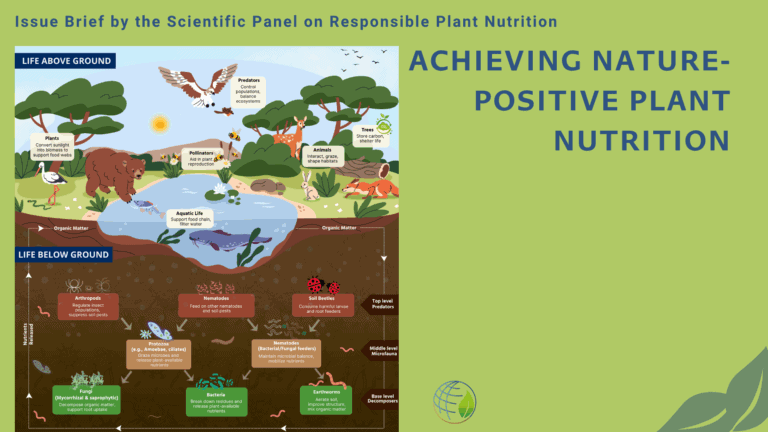
Expanding croplands destroys habitats across forests, grasslands and savannas. A global analysis found that land conversion and intensive use reduced local species richness and altered ecological communities. In northern Mozambique’s miombo savanna woodlands, extensive agricultural conversion was also associated with fewer tree and mammal species. Producing a given harvest on less land can protect more biodiversity across the landscape than spreading lower-yield farming across a larger area. This can hold true despite greater impacts within cultivated fields, provided the remaining natural habitat is protected. Reducing harm within farmland remains important, including limiting nutrient losses and protecting waterways with buffer vegetation. These benefits reinforce the case for coupling higher yields with conservation. [10, 11]
Protecting and rebuilding the soil
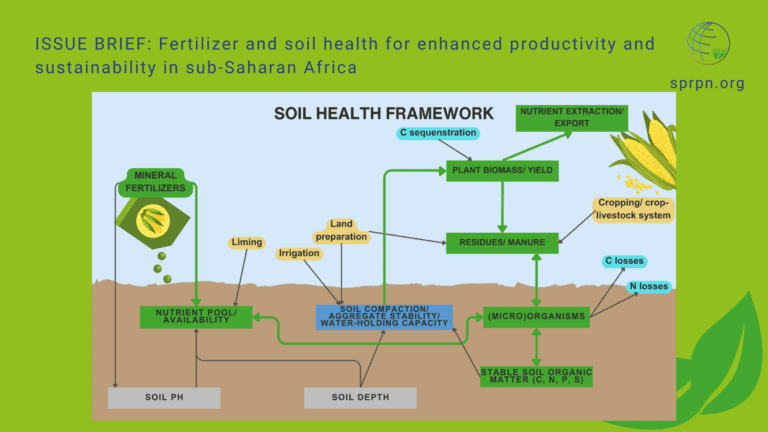
Raising productivity also means protecting the land already cultivated. Erosion strips away topsoil and nutrients, undermining future harvests. Ground cover cushions the impact of raindrops, while roots and surface residues help protect soil and encourage water to infiltrate rather than run off. Keeping land covered between harvests extends that protection throughout the year. [12]
Correcting nutrient shortages produces more crop biomass and residues, making protective cover easier to maintain. In a Kenyan maize example, fertiliser increased stover production sufficiently to support soil cover that low-yielding crops could not provide. Combining fertiliser with deliberate residue management, cover crops and soil conservation helps sustain that protection. Residues also serve as livestock feed and fuel, so farmers face competing demands for them. Fertiliser complements soil-cover and conservation practices; it cannot substitute for them. [13]
Retaining mulch helps control erosion, one of its clearest benefits. Less soil leaving fields can also mean less sediment entering watercourses. The practical aim is to combine better crop growth with enough lasting ground cover and appropriate control of runoff. [14]
The benefits extend below ground, where additional organic inputs can help rebuild soil organic matter. Where nutrient shortages restrict growth, fertiliser can increase root growth and the crop residues available to return to the soil. These organic inputs feed soil organisms, help bind soil particles into stable aggregates, and support nutrient cycling and water infiltration. Retaining more of this material strengthens the connection between productive crops and healthy soil. Some additional carbon can persist in the soil, offering a modest opportunity for carbon sequestration alongside these practical benefits. [15]
Plant nutrition and water management also reinforce each other. Where nutrients limit growth, fertiliser can build a fuller canopy, reducing evaporation from bare soil and increasing the share of water used in crop growth. This can produce more food per unit of water consumed. For rainfed farming, the opportunity centres on “green water”: rainfall stored as soil moisture. Making better use of it can help meet food demand with less need to expand irrigation withdrawals from rivers, lakes and aquifers—the “blue water” resource. [16]
Climate and water caveats
Water productivity here means harvest per unit of evapotranspiration. Higher productivity does not necessarily reduce total water consumption or increase downstream flows: a stronger crop may transpire more. Fertiliser cannot overcome severe drought; rates must reflect available water.
Carbon gains depend on biomass returned, decomposition, soil and climate. Higher carbon than in an unfertilised field may reflect slower depletion rather than a net increase over time. Soil-carbon gains do not by themselves establish a net climate benefit after fertiliser production and nitrous oxide emissions.
This connection matters to climate adaptation. Combining balanced nutrition with soil cover, water conservation and varieties suited to local rainfall can help rainfed farming cope with dry spells and variable seasons. Fertiliser plans should adjust to the water available, including during the growing season. [17]
Making better harvests affordable and rewarding
For a smallholder, a larger harvest from the same plot can mean more food retained for the household and more produce to sell. But tonnes alone do not pay school fees. What matters is the value of the additional harvest after paying for fertiliser, labour and other inputs. Advice must therefore target profitable responses and account for rainfall risk, local crop prices and the farmer’s budget. Research on site-specific nutrient management in African rice, maize and cassava systems shows the potential to improve yields, profitability and nutrient-use efficiency. [18]
Those returns remain out of reach when farmers cannot buy fertiliser at the right time. High inland transport costs, weak distribution networks and limited finance raise costs and restrict access. The 2021–22 price shock exposed that vulnerability: surveys in Kenya and Ghana found that farmers reduced the area of land fertilised or omitted applications. Improving roads, competitive supply chains and seasonal finance belong alongside better advice. Well-targeted support should make profitable nutrient use affordable while recognising the risk of a failed rainy season. [19]
Those gains can circulate through the rural economy. More marketable produce creates business for traders, transporters, storage operators and processors. Higher farm incomes support demand for goods and services in nearby towns and villages, creating opportunities for employment beyond farming. Research on African agricultural growth linkages documents this multiplier mechanism. Better roads, reliable markets and access to finance help turn harvests into livelihoods. [20]
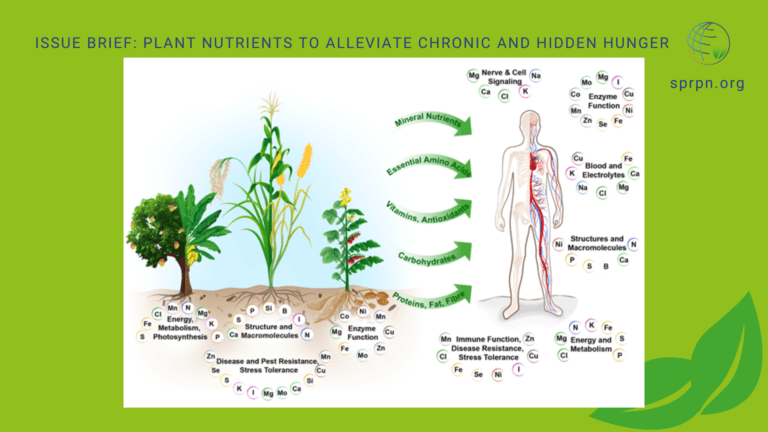
Food security also concerns the quality of the harvest. For example, zinc is essential for both crops and people, making its supply a link between plant nutrition and human diets. In Malawi maize trials, additional zinc fertiliser raised grain yield by 11% and grain zinc concentration by 15%. Where zinc supply limits production, addressing it can therefore deliver more food with greater nutritional value, helping improve dietary zinc supply and potentially reduce “hidden hunger”. [21]
More nutrients where needed and less waste everywhere
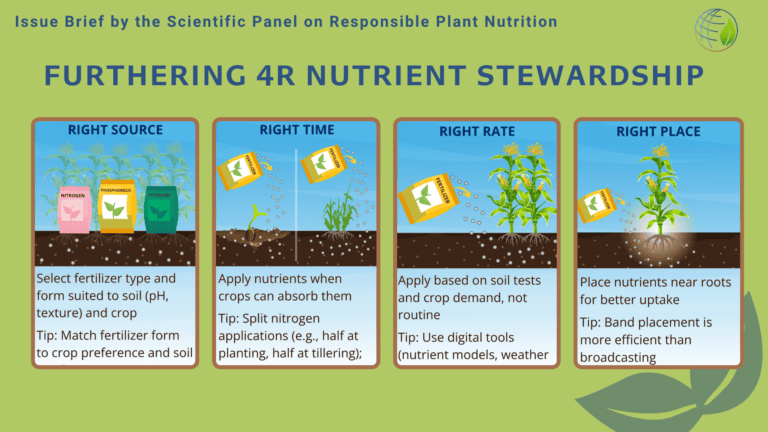
Africa need not repeat the over-fertilisation experienced in parts of higher-income countries. Nutrients applied beyond crop needs waste money and can pollute water and air; excessive nitrogen also increases nitrous oxide emissions. Responsible plant nutrition matches the nutrient source, rate, timing and placement to the crop and site. That can mean splitting nitrogen applications to follow crop demand, placing nutrients where roots can reach them and avoiding applications when heavy rain is likely to carry them away. [22]
Experience across world regions offers grounds for optimism. Regulation, incentives and precise nutrient management can improve efficiency, helping farmers maintain or increase productivity with less fertiliser. Poorly designed subsidies, however, can encourage nutrient imbalances. For African countries, the implication is to build efficient, balanced nutrition into agricultural development from the outset, with support tied to better agronomy and farmers’ returns. [23]
Recommendations must reflect differences among fields: soil nutrient supply, previous crops, manure inputs, attainable yields and water availability. They must also address other constraints: applying lime where acidity restricts root growth, for example, or correcting diagnosed deficiencies of secondary nutrients and micronutrients. Site-specific advice helps farmers invest in the nutrients their crops need while limiting avoidable losses. Local trials and farmer feedback are essential for checking that recommendations work in practice. [24, 25]
Putting this into practice starts with a realistic yield target. Farmers and advisers need to account for nutrients supplied by soil and organic inputs, assess the economics, and match application to crop uptake and root access. Balanced nutrition matters because an excess of one nutrient cannot compensate for a shortage of another. Advice must also fit the farmer’s labour and cash constraints. [26]
Phosphorus deserves attention alongside nitrogen. Its main mineral source, phosphate rock, is finite, and no other element can replace it in crop nutrition. Reported reserves are heavily concentrated in Morocco and Western Sahara. For African food security, that makes reliable regional supply, efficient use and recovery from organic wastes strategic priorities. [27]
On strongly weathered, acidic soils, iron and aluminium compounds can bind phosphorus, reducing its immediate availability to roots. Matching phosphorus inputs and placement to soil conditions, recycling organic inputs and preventing erosion help use it well. Where acidity damages roots, appropriate liming can improve their access to phosphorus and other nutrients. [28]
Good crop management helps turn those nutrients into harvests: locally adapted varieties, timely planting, appropriate plant populations and early control of weeds, pests and diseases. Addressing compacted layers where they restrict roots can also improve access to nutrients and water. Fertiliser advice works best as part of this wider agronomic package. [29]
Digital advisory services can complement public extension and local agronomists. One example is iSDA’s Virtual Agronomist, which delivers field-specific crop and nutrient advice through WhatsApp. In an evaluation involving 605 farmers growing maize, sorghum and sunflower in Kenya and Uganda, farmers using Virtual Agronomist with lead-farmer support achieved yields averaging 48% higher than those of non-users. With more intensive support from field technicians, yields were 121% higher. The findings highlight the potential of combining digital recommendations with practical help throughout the growing season. [30]
Cleaner fertilisers from factory to field
Technology can further reduce climate cost of better plant nutrition. At fertiliser factories, catalysts can destroy nitrous oxide released during nitric acid production. A South African installation was designed to cut this emission stream by up to 98%, showing the scope for established industrial technology to deliver large reductions. [31]
Renewable ammonia offers another route: hydrogen made with renewable electricity replaces hydrogen from fossil fuels. Egypt demonstrated this approach with a certified shipment in 2023. Smaller plants serving regional markets could also reduce dependence on imported nitrogen fertilisers where renewable power, finance and local demand make them viable. The priority is to deliver affordable fertiliser products that farmers can safely use, backed by reliable distribution and advice. Pilot investments should compare these options with larger plants, regional trade and improved logistics.
The Egyptian pilot shipment does not establish widespread smallholder supply, and Nelson et al. (2026) is an assessment agenda, not evidence of commercial deployment. Converting ammonia into farmer-ready products remains a key bottleneck for decentralised systems; cost, storage, safety and seasonal demand need local evaluation. Renewable manufacture does not prevent field nitrous oxide emissions.
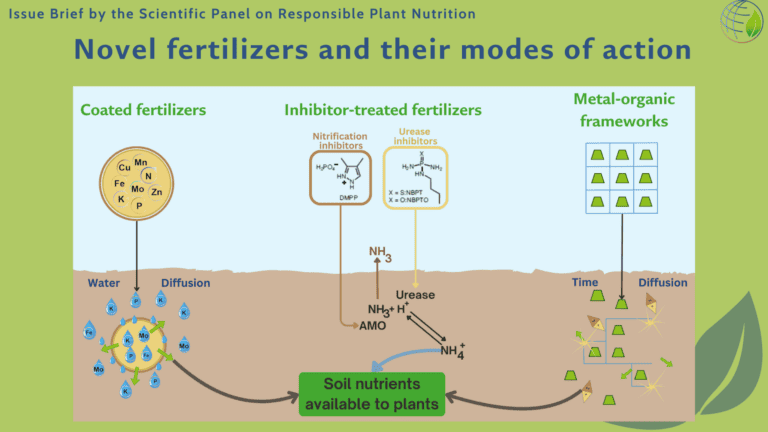
On farms, nitrification inhibitors slow soil processes that generate nitrous oxide. Across international cereal trials, they reduced direct emissions by an average of 38%, making them promising candidates for targeted African testing. [32]
Urea treated with urease inhibitors is already sold in South Africa and helps retain nitrogen by reducing ammonia loss. These products can complement field-specific advice, with adoption guided by local performance and the benefits farmers obtain for the extra cost. [33]
The goal should be better-fed crops on better-protected soil, with farmers earning enough to sustain the improvement. For nutrient-depleted farming systems, increased fertiliser use is an essential part of that goal. Combined with locally appropriate agronomy and protection of forests, grasslands and savannas, it can help African countries grow more food while safeguarding biodiversity and avoiding a far greater environmental cost.